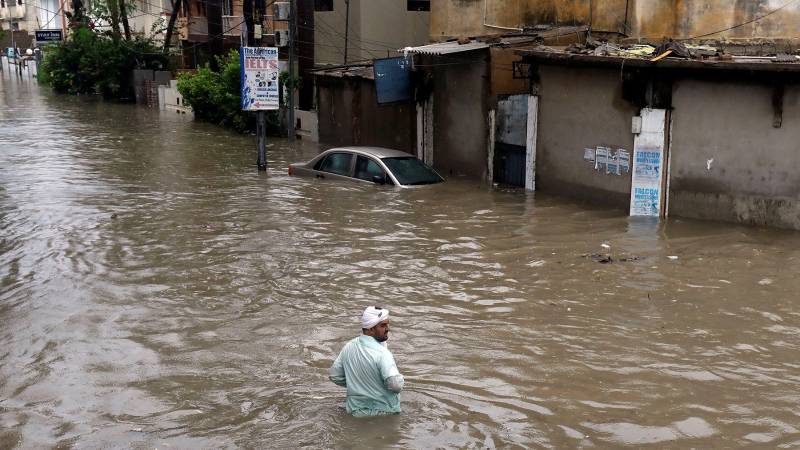
Every monsoon brings with it the same ritual: warnings of heavy rains, urban flooding, and disrupted lives. This year is no different. The National Disaster Management Authority (NDMA) has once again issued advisories for Karachi, Hyderabad, Sukkur, Mirpurkhas, Thatta, Badin, Jamshoro, and Dadu, urging residents to “remain alert and closely monitor official updates to mitigate potential hazards.”
But let us pause here. The report itself tells us that “according to the Zoom Earth weather tracking website, an intense system forming over Sindh would hit urban centres like Hyderabad and Karachi after midnight.” If an external platform like Zoom Earth can provide this level of detail, what then is the role of our two national agencies – the Pakistan Meteorological Department (PMD) and the NDMA? Why must we rely on outside sources for clarity, while our own institutions remain vague and ceremonial in their communication?
The NDMA’s advisory presumes that people across Sindh – whether literate or illiterate, urban or rural – will somehow “remain alert and closely monitor official updates.” This reflects a disturbing disconnect from reality. In countries that take disaster preparedness seriously, early warning systems reach the last mile through SMS alerts, mosque loudspeakers, community radios, and local administrators. In Pakistan, we continue to outsource responsibility to citizens without equipping them with the means to act.
Equally troubling is the language of these warnings. The report admits that “urban flooding is expected to persist in Karachi, Hyderabad, Sukkur and Mirpurkhas due to continued downpours and poor drainage infrastructure.” This may sound like honesty, but what has NDMA ever done to compel provincial or city governments to fix this “poor drainage infrastructure”? Advisories repeat themselves each year, but the institutional silence on follow-up action ensures that citizens remain trapped in a cycle of preventable suffering. No findings reports of flood disasters highlighting the weak areas that caused problems for the people have ever been submitted by the NDMA.
Until Pakistan invests in localised forecasting, last-mile communication, and structural reforms in urban drainage, these annual advisories will remain nothing more than seasonal press releases
Then there is the problem of scale. The warning that “districts such as Thatta, Badin, Jamshoro and Dadu face an elevated risk of flash flooding” is so broad as to be meaningless. These districts span thousands of square kilometres. Without pinpointing which tehsils, union councils, or embankments are under threat, such warnings cannot help anyone prepare. Similarly, references to “rising water levels in the Indus River and its tributaries” and fears of inundating “low-lying areas” ring hollow without naming the specific river stretches at risk.
The same vagueness extends to infrastructure. Citizens are told that “major highways and local roads could be submerged.” But which highways – the M-9, N-5, or the Super Highway? Which local roads? For transporters, ambulance services, or daily commuters, specificity is not a luxury; it is a necessity.
Finally, NDMA has advised residents to “relocate valuables and livestock to safer locations.” But how are ordinary villagers supposed to determine what counts as “safer”? Unless authorities identify evacuation centres, higher ground spots, or public buildings to serve as shelters, such advice is little more than passing the burden back onto those who lack the resources to decide for themselves.
The cost of this negligence is borne by ordinary people. Each year, families lose homes, livelihoods, and loved ones because warnings are generic, responses are delayed, and accountability is absent. Until Pakistan invests in localised forecasting, last-mile communication, and structural reforms in urban drainage, these annual advisories will remain nothing more than seasonal press releases.
Warnings without proper direction are no warnings at all.


