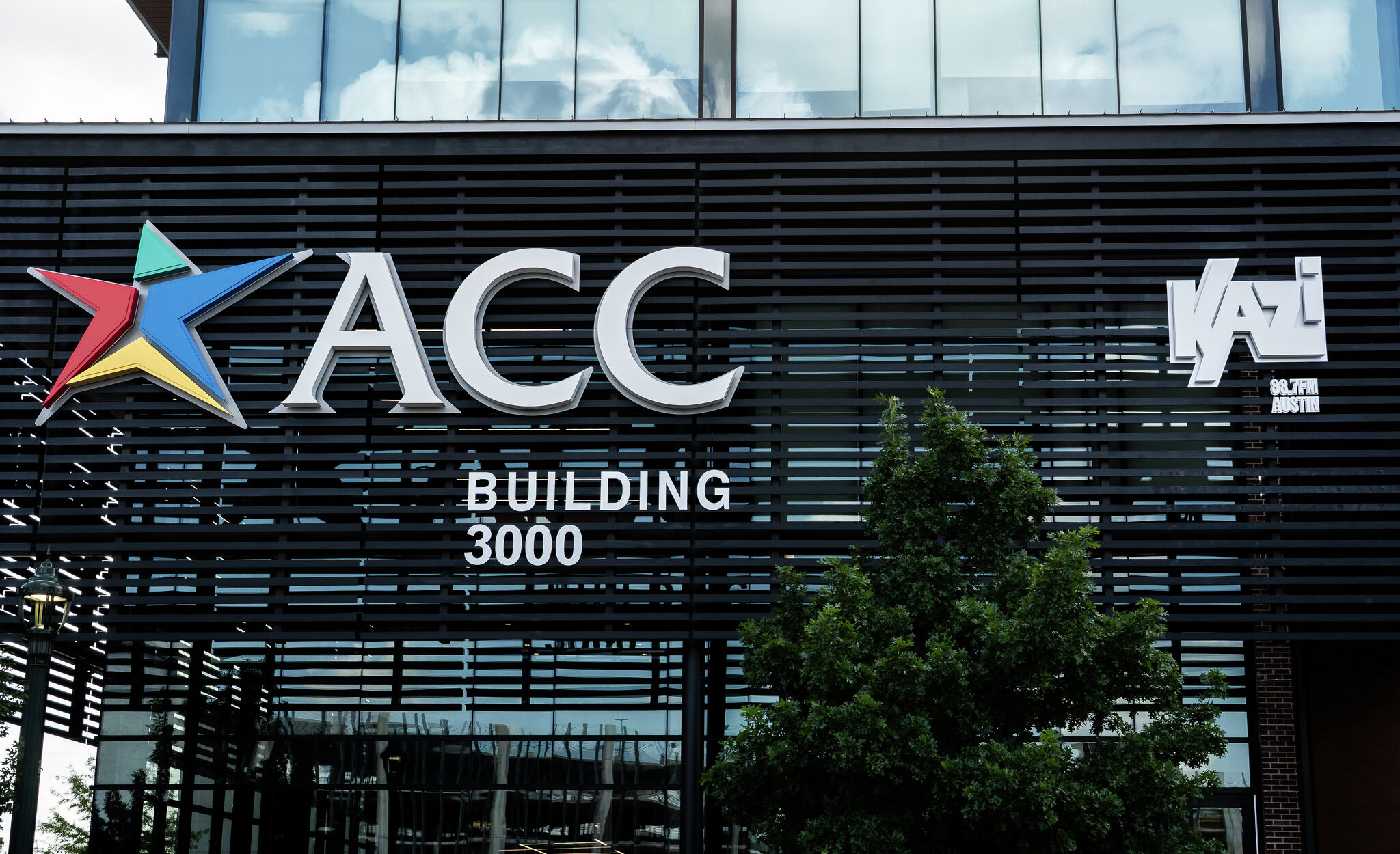
As financial pressures increase on higher education institutions with four-year universities announcing hiring freezes, Austin Community College is growing anyway.
About 4,600 more students have enrolled for classes this fall compared to this time last year, data from the college shows — about a 15% increase from last fall, which saw its own unprecedented rise after the college passed a free tuition pilot program for recent high school graduates.
Article continues below this ad
ACC typically serves 70,000 students a year and is the primary workforce trainer for Central Texas.
As an open-access institution, ACC allows anyone to enroll. But class sizes are limited: a problem the college has spent the past six weeks tackling through rapid hiring and expansion.
“We have to” keep up with the growth, said Pedro Merced, who chairs ACC’s mathematics department that is facing one of the steepest increases in student interest. “We’re bracing for it, but I’m optimistic.”
More than 5,870 students are on the waitlist for course sections in the fall, said Gaye Lynn Scott, vice chancellor of instruction. The increase is felt in every department — particularly in liberal arts, science, engineering and math and the skilled trades, data from the college indicates.
Article continues below this ad
The growth comes as colleges, particularly four-year universities, face financial pressure with declining federal and sometimes state support. After President Donald Trump took office and agencies began trimming federal spending, multiple universities such as Brown University and Harvard University underwent a hiring freeze.
But ACC is preparing to do the opposite — grow. To meet the need, ACC set out to hire enough adjunct professors to add 500 new course sections within six weeks.
“Our goal is to meet every need,” Scott said. “This is a moment where everyone at the college comes together and centers the mission, and centers the needs of every new student and every returning student, and helps them find what they need for the fall.”
How is ACC growing?
Meeting the needs of 5,000 more students by fall semester, of course, necessitates creative thinking and collaboration, Scott said. But she said ACC is up for the challenge.
Article continues below this ad
The free tuition pilot, city and university partnerships, and the addition of a campus in Lockhart his year has incentivized greater interest in the school. ACC’s goal now, Scott said, is to meet that need by giving any interested student “some way for them to start.”
“We don’t ever want to say we’re at capacity,” Scott said.
At an adjunct hiring faculty fair July 25, 50 people were hired on the spot, pending background checks, to support the new growth, spokesperson Sydney Pruitt said. ACC is also offering a “temporary emergency hire” to adjunct faculty to work as full professors for a year, taking on more classes.
In six weeks, the college has hired more than 100 adjuncts to meet the demand for 500 more sections for the fall. ACC has also been creating packages of courses that can be taken at a time, advising students on the waitlist on what’s available and incentivizing current professors take on more courses, she said.
Article continues below this ad
The hiring has allowed the college to add 332 class sections, including 237 on campus. Now, it is working on expanding online opportunities and classes that begin this fall.
Beyond hiring and adding course sections, instruction staff are collaborating with student affairs, marketing, human resources and marketing departments to ensure students are supported.
“The beautiful thing about the people working at ACC is that they’re always flexible and willing to do what it takes, put in the necessary time and the effort in order to meet those student needs,” said Merced, who will take on an extra one to two courses this fall.
Article continues below this ad
Merced said that since last year, there has been an electric “buzz” on campus. He thinks this growth is only the beginning.
“We’ve really doubled down on our student engagement and our student services,” Merced said. “The enrollment numbers are going to keep on going up, and we’re going to have to constantly be flexible in order to offer the courses and meet the demands of the population coming in.”


